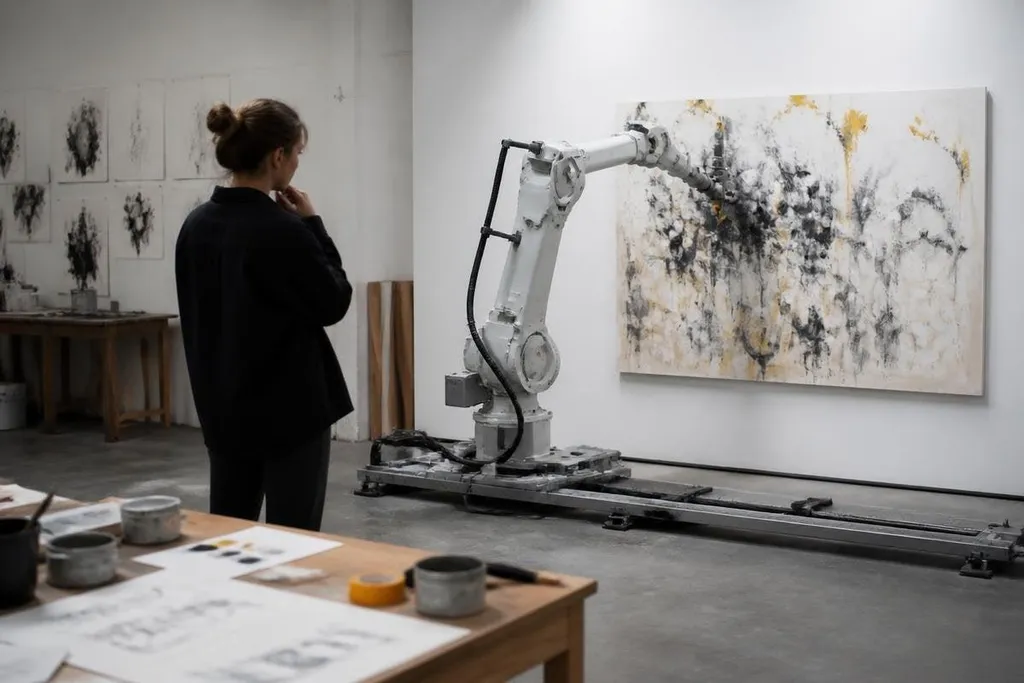
Robotic systems can place paint on a surface, shape a piece of metal, or turn a digital plan into a physical object. The harder question begins after the machine moves: who made the artistic choice, and where does the work belong?
For artists using robotic arms, plotters, cameras, or generative software, the machine changes the path from idea to object. It also asks viewers to judge code, data, setup, and selection alongside the finished piece.
- Programmed motion can repeat with exact timing, but a person still sets the task.
- Sensors can change a robot’s action as conditions change, giving the work a live response.
- The final object may carry several authors: the person, the software, the training data, and the machine.
The hand is no longer the whole test
People often connect art with a person’s hand. A brushstroke, cut, or camera angle can show how someone worked. That machine can copy the visible action, yet the copy may come from a toolpath written far from the finished piece.
That does not settle the question. A sculptor may choose the material, define the limits, set the speed, and keep one result from hundreds of runs. Those choices shape the work even when the robot performs the physical motion.
A useful test is to separate the actions. Who chose the subject? Who set the rules? Who selected the output? Who could explain why one result stayed and another was rejected? The answers give a clearer view of authorship than the presence of a robot alone.
Code can act like a set of artistic rules
The machine follows instructions, but those instructions can leave room for choice. A program might set a fixed path, alter movement after a camera reading, or use random values to pick the next stroke. Each method gives the artist a different kind of control.
A fixed path makes the machine closer to a precise tool. Sensor input gives the work a response to light, sound, shape, or contact. Random selection can create results the artist did not plan in detail, although the artist still chose the range of possible results.
The physical setup matters too. A short tool, slow motor, or narrow work area can change the marks on the surface. Limits are part of the process, much like the grain of wood or the behavior of wet clay.
The machine’s role depends on the evidence
Calling a robot an artist can hide the work done by people who build the system.
A programmer writes the control code. A technician sets the robot’s position and checks its motion. An artist decides what the output means and what the public sees.
Some systems also use cameras or generative models. In that case, the source material and selection rules matter. A machine may produce hundreds of images, but the person who selects one result has made a strong editorial choice.
The finished piece can hide that work, so Robot24.com's robotics reporting can place the artwork beside the sensors, code, and manual setup that shaped it. That record lets you judge where the artist's decisions end and the robot's work begins.
I think the strongest robot-made art keeps the machine’s limits visible. A piece becomes harder to judge when the process is hidden behind a claim that the robot created everything alone.
What viewers should ask
The label beside a robot-made work can answer more than the name of the machine. It can state who wrote the code, what the robot sensed, how many outputs were made, and how the final piece was chosen.
Use this checklist when you view or review a work made with a robot:
- Name the human choices: subject, material, motion rules, and final selection
- Check the machine’s input: fixed code, sensor data, random values, or generated instructions
- Separate output from process: one object may hide many failed runs or rejected results
- Ask what the robot changes: speed, repeatability, scale, contact, or the artist’s role
- Read the limits: workspace, tool shape, motor control, and sensor range
The definition of art does not need to rest on whether a person touched every part of the work. It can rest on intention, control, selection, and the meaning attached to the result. Robots make those parts easier to see because they split physical action from artistic choice.
The next useful question asks who made each decision, rather than whether the robot deserves a human title. That record may matter as much as the object on the wall.